
At what point in my project should I get an Interior Designer involved?
When Should You Hire an Interior Designer? Earlier Than You Think.
Many homeowners assume an Interior Designer is one of the last professionals hired during a custom home project—someone who arrives after the plans are complete to select finishes, furnishings, and paint colors.
In reality, some of the most successful luxury homes begin with the Interior Designer involved from the very start.
Long before construction begins, a designer can help homeowners define how they want to live, evaluate potential architects and builders, and ensure that every design decision supports both the aesthetics and functionality of the home.
The earlier an Interior Designer joins the team, the greater the opportunity to influence the outcome.
The Interior Designer's Role Begins Before Design
One of the first challenges homeowners face is selecting the right professionals for their project.
Architects, builders, and designers each bring different strengths, personalities, and approaches to the process. Finding a team that aligns with a client's goals, lifestyle, budget, and aesthetic vision can be overwhelming.
An experienced Interior Designer often serves as a trusted advisor during this stage.
Because designers regularly collaborate with architects, builders, cabinetmakers, and trades, they have firsthand knowledge of how teams work together, where their strengths lie, and which professionals may be best suited for a particular project.
A homeowner seeking a highly contemporary residence may require a different team than someone building a timeless lake home designed for generations of family gatherings.
The right fit matters.
Designing Around How You Live
Before discussing exterior elevations or floor plans, the most important question is often:
How do you want to live?
A skilled Interior Designer helps clients answer that question.
How does the family entertain?
Do they cook frequently?
Do they work from home?
How do they spend weekends?
What spaces do they use every day—and which ones remain empty?
Understanding these patterns allows the design team to create a home that reflects real life rather than simply responding to trends.
These conversations frequently influence decisions that ultimately affect the architecture itself, including room sizes, circulation patterns, ceiling treatments, storage solutions, kitchen layouts, and the relationship between indoor and outdoor living spaces.
Why Designers Should Be Involved Before Plans Are Complete
Many homeowners are surprised to learn how much of a home's functionality is determined before the first finish is selected.
Furniture layouts influence room dimensions.
Lighting plans influence ceiling design.
Cabinetry design affects wall configurations.
Kitchen planning impacts window placement, appliance locations, and traffic flow.
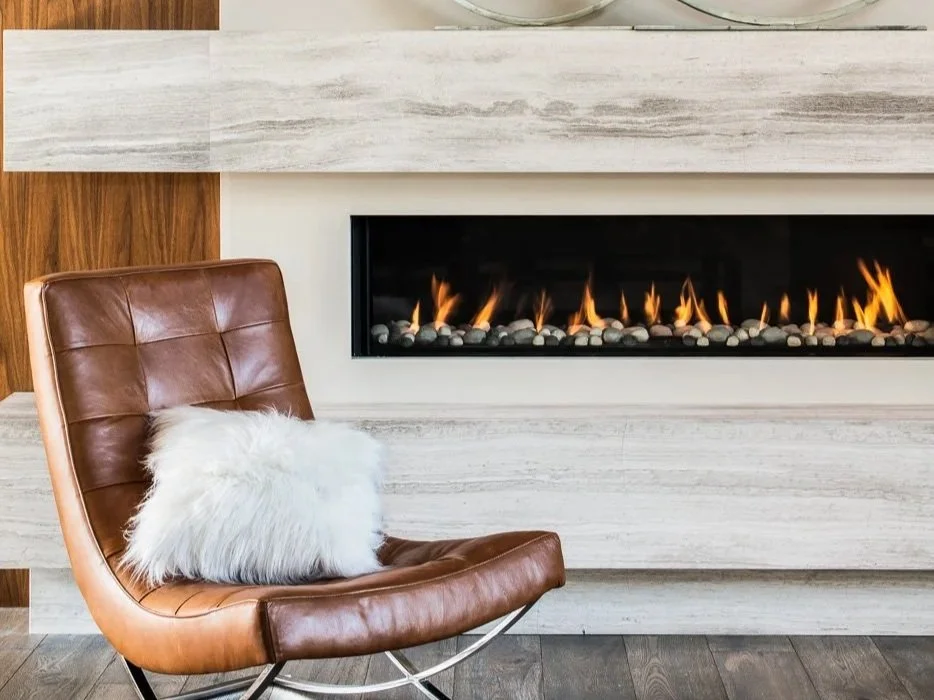
Custom fireplaces and feature walls are frequently created by Designers and are integrated into the structure early on.
When Interior Designers are involved from the start, these decisions can be thoughtfully integrated into the architecture rather than modified later through costly revisions.
The result is a home that feels cohesive from the inside out.
How Architects, Builders, and Interior Designers Work Together
The best luxury homes are rarely the result of one professional working independently.
Instead, they emerge from collaboration.
The architect establishes the overall structure, massing, and exterior expression of the home.
The builder provides construction expertise, budgeting guidance, scheduling, and execution.
The Interior Designer develops the interior experience—how spaces function, connect, feel, and support the homeowner's lifestyle.
Each discipline contributes a unique perspective.
When these professionals collaborate early and often, the result is a more thoughtful, better-executed project.
Preventing Expensive Changes Later
One of the greatest benefits of early designer involvement is the ability to identify potential issues before construction begins.
Questions such as:
Will furniture fit comfortably within the space?
Is there enough storage?
Are electrical locations aligned with furniture plans?
Does the kitchen function efficiently?
Are sightlines and focal points properly considered?
Is the lighting layered appropriately for everyday living?
Addressing these questions during design is significantly easier—and less expensive—than making changes during construction.
The Most Successful Projects Start With a Team
Luxury homes are significant investments, both financially and emotionally.
The most successful projects begin by assembling the right team and establishing a shared vision from the outset.
Rather than viewing Interior Design as the final layer applied to a completed home, today's most discerning homeowners recognize it as an integral part of the design process from day one.
When architects, builders, and Interior Designers collaborate from the earliest stages, the result is more than a beautiful home.
It is a home that functions beautifully, reflects the people who live there, and stands the test of time.